13 posts · Curated China travel tips
Someone in my DMs just asked: "Is Chongqing worth visiting?" Let me tell you about the last time I took a client there. We arrived at night. Stepped out of the airport, and she stopped dead. The entire city was glowing — skyscrapers built into mountains, lights reflecting off the river, bridges crisscrossing in every direction. She said: "This looks like a movie set." Next morning we ate noodles at a tiny shop my friend runs. Bowl of chongqing xiaomian — 8 yuan, and she said it was the best thing she'd eaten in China. That afternoon we took the Yangtze River cable car across the city. She was pressed against the window taking videos the whole way. At dinner she asked me: "Why don't more tourists come here?" Good question. I don't know either. But my clients do.
I took a British family to a night market in Kunming last week. The dad stopped at a stall selling fried insects and his 10-year-old daughter said: "Daddy if you eat one I'll never be embarrassed by you again." He ate three. She high-fived him. The mom filmed the whole thing. This is what I tell my clients: China's street food isn't just about eating. It's about the stories you take home. And some of those stories come on a stick.
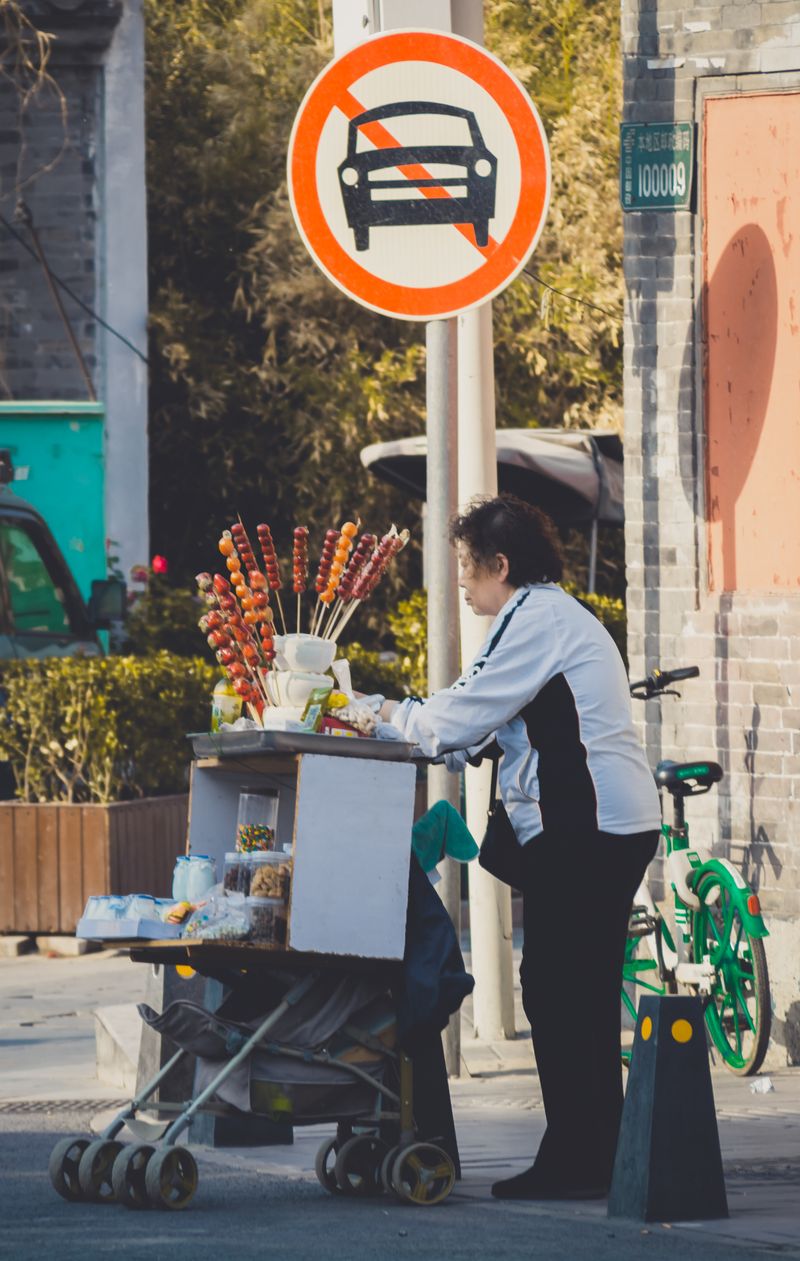
I took a British family to a night market in Kunming last week. The dad stopped in front of a stall selling fried insects and just stared. "The scorpion. Is it... is it good?" he asked. I told him the truth: they taste like prawn crackers with extra crunch. The grubs are nuttier. The scorpion is mostly just a vehicle for the seasoning powder they toss on it. He bought one scorpion stick (¥15), closed his eyes, and bit. His wife filmed. His kids screamed with laughter. He opened his eyes, chewed, and said: "...it's actually not bad." That's the night market experience in a nutshell. You try things you'd never order in a restaurant. You eat while walking. You discover that some of China's best food comes on a stick from a cart with a single lightbulb. Every Chinese city has a great night market. The biggest are famous — Wangfujing in Beijing, Yuyuan in Shanghai. But the real ones are the local night markets three blocks from your hotel. Ask your front desk. They'll point you to the right street.
Took a French couple to a food market in Chengdu last month. They wanted to try everything but had no idea where to start. I told them: pick whatever vegetable or meat catches your eye, hand it to any stall owner, ask them to cook it. No menu. No prices. Just point, nod, and wait. The wife grabbed a green leafy thing she had never seen. Turned out to be water spinach (空心菜). The owner stir-fried it with garlic in two minutes. Cost: 8 yuan. She stared at the plate like it was magic. She told me later that was the best meal of their trip. She still does not know what she ate. Some of the best meals in China do not happen in restaurants. They happen on plastic stools in a market alley, eating something cooked by someone whose grandmother taught them.
The best meal I've had this month wasn't in a restaurant. It was a ¥12 bowl of noodles from a lady who sets up her cart at the same street corner in Chongqing every evening at 6pm. She's been doing this for 18 years. Her broth simmers for five hours before she leaves home. The noodles come from a specific shop three streets over. She knows exactly when to scoop them for that perfect chewy texture. I brought an American client there once. He was nervous about street food. One bite later: "This is better than the ¥400 dinner we had last night." Here's what I've learned from 15 years of eating on Chinese streets: the best food is rarely in a guidebook. It's at the cart with the longest queue of locals. It's the lady who's been at the same spot for a decade. It's the place with one item on the menu because that's all they need to make. My advice: skip one fancy restaurant meal on your trip. Find a street cart. Point at what the person ahead of you ordered. Sit on a tiny plastic stool. It'll be the meal you remember.
My son asked me last week: "Mama, why do Chinese people eat with chopsticks?" I didn't have a good answer. So I asked my uncle, who's been a chef for 40 years. He said: "Because we cut everything in the kitchen. No knives on the table. The chopsticks are for picking up what's already ready." And that's actually a great way to understand Chinese food culture. Western cooking leaves the knife to the diner. Chinese cooking does all the work for you — meat sliced thin, vegetables bite-sized, everything ready to pick up and eat. The chopstick is just the tool that delivers it. The real skill isn't chopsticks — it's the rice bowl. Hold it close to your mouth and push food in. That's how locals eat. Keeping the bowl on the table and leaning down? That's what kids do (and my four-year-old still does it, sauce on his chin, every single meal). If you can handle chopsticks well enough to pick up a single peanut, you're better than most tourists. If you can pick up a slippery mushroom? You've graduated.
A British couple joined me for dinner at a local restaurant in Chongqing. When the food arrived — six dishes for four people — the husband looked confused. "Should I order my own plate?" I explained: in China, you do not order for yourself. Dishes go in the center of the table and everyone shares. The round table with the rotating glass top (lazy susan) is designed for this. You spin it, take what you want, spin it to the next person. There are rules nobody tells you: wait for the host to start eating first. Do not stick your chopsticks upright in your rice bowl (that is for funerals). If you are the host, order one dish per person plus one more. The fish should face the guest of honor. The British guy spent the whole dinner trying to serve others before serving himself — which is actually the correct Chinese way of showing respect. By the end of the meal he had figured out the rhythm: you eat, you talk, you spin, you repeat. He told me: "This is how dinner should be. It is social. Western dining feels so lonely in comparison." He is not wrong. The round table is not just furniture — it is a philosophy. No head of the table. No separate plates. Just everyone eating from the same dishes, connected by a spinning circle of food.
Took a German couple to hotpot yesterday. It was 38°C outside. The husband looked at the bubbling red oil and said: "You want us to eat boiling food in this weather?" I just smiled and ordered extra beef. Two hours later he was rolling up his sleeves, sweat dripping, declaring it was the best meal he has had in China. His wife was quieter — too busy fighting for the last piece of tripe. Here is the thing about Chinese food culture that surprises most tourists: we eat hotpot year-round. In fact, summer is when it hits different. The TCM logic is that the sweat cools you down from the inside out. I do not know if that is scientifically accurate, but I know that after a hotpot dinner in July, walking out into the hot night air feels... refreshing? It makes no sense until you try it. The German guy asked for the restaurant name before leaving. Said he wanted to come back tomorrow. I told him the place does not have an English name. He said: "Good. Means the food is real."
A German client asked me worriedly last week: "Will I survive China without speaking Chinese?" I told him about the time I watched a Swedish tourist order dinner at a busy Chengdu restaurant entirely through charades. He pointed at a neighbour's bowl, held up two fingers, and gave a thumbs up. The waiter nodded, came back ten minutes with the exact same dish, and the guy ate it happily. You don't need Chinese to travel China. But you do need three things: 1. Google Translate with Chinese downloaded offline. Point camera at menu, get translation. Not perfect, but good enough. 2. Pleco dictionary for when Translate fails. The handwriting input is a lifesaver for single characters. 3. A willingness to be wrong. You'll point at the wrong menu item, order something unexpected, and discover your new memorable dish. That's not a mistake — that's the experience. The three phrases I make every client learn: 谢谢 (thank you), 多少钱 (how much), and 这个 (this one — accompanied by pointing). With those three, you can handle 90% of daily interactions. My client survived. Thrived, actually. Ate his way through three cities without a single English menu.
Xi'an's Muslim Quarter at sunset is one of those places I'd send every traveller even if they had only one day in China. The narrow alleys fill with smoke from a thousand grill carts. Lamb skewers sizzle. Biang biang noodles get stretched and slapped on counters. Persimmon cakes fry in giant woks. The Yangrou Paomo (bread crumbled into lamb soup) at Lao Sun Jia is the same recipe they used 50 years ago. I bring every client here. The ones who love food leave overwhelmed. The ones who don't care about food also leave overwhelmed — because this place has a way of making you care. Two tips: go hungry (obvious), and start from the Drum Tower end working inward instead of the main gate. The crowds thin out and the vendors get more interesting the deeper you go.
Last night I wanted 小龙虾 (crawfish) but didn't want to leave the house. Opened Meituan at 9:14 PM. Food arrived at 9:36 PM. Still steaming. Cost: ¥68 including delivery. China's food delivery ecosystem is something I don't think visitors fully appreciate until they experience it. Meituan and Ele.me cover everything — from hotpot ingredients delivered to your door to a single bubble tea at 2 AM. For travelers, here's how to use it: Download Meituan or Ele.me before your trip. The apps are in Chinese, but the interface is visual — food photos, star ratings, price tags. Open it, look at what's nearby, and point at something that looks good. Most hotel front desks will help you place an order if you show them what you want on your phone. I've done this for friends visiting from abroad countless times — they pick a photo, I type the address, and 30 minutes later dinner arrives. Payment is through Alipay or WeChat Pay, both already linked in the app if you've set them up. Cash on delivery also works in most places. The real magic? Late at night when jet lag hits and you've been in your hotel room for hours and suddenly realize you haven't eaten. A few taps on the phone and hot noodles show up at your door. That's modern China, and it's beautiful.
Sunday lunch in our house is never planned. I open the fridge, stare at it for five minutes, and then improvise based on whatever my kids haven't rejected yet. Today's menu: hand-pulled noodles (the store-bought kind, don't judge me — I'm not my grandmother), a tomato egg stir-fry that's so simple it barely counts as cooking, and the leftover braised pork from yesterday that somehow tastes even better than when I first made it. My oldest insisted on 'helping' crack the eggs. Two out of three made it into the bowl. The third one ended up on the counter, where my younger one immediately tried to draw in it with her finger. I counted to five and decided this was fine. The best moment of cooking with kids isn't the food — it's the quiet that falls over the kitchen when they're both focused on a task. Chopping scallions. Tossing noodles. Licking the spoon when they think I'm not looking. We sat down at 1pm, the table a mess of mismatched bowls and spilled soy sauce. My younger one announced: 'Mama, this is the best lunch ever.' She says that every week. I still believe her every time.
A family from London asked me to take them to a 'real' restaurant in Chongqing. Not the tourist ones on Hongyadong. So I took them to my uncle's hotpot place in a side alley near Jiefangbei. No English menu, no pictures — just the smell of numbing Sichuan pepper hitting you from the street. The dad looked nervous. Two hours later he was dipping beef tripe like a local, sweating through his shirt, asking me what else Chongqing has that tourists miss. That's the thing about this city — the best stuff is never on TripAdvisor.