Back to Blog





traveltips
14 posts · Curated China travel tips
All Posts · 14
Two years ago a client slipped on a wet marble floor at his Beijing hotel. Just a sprained wrist — but his travel insurance didn't cover China. He ended up paying ¥800 at a walk-in clinic and spent the rest of his trip anxious about what would happen if something serious happened. Don't be that guy. I tell every client: check your travel insurance covers China BEFORE you leave. Not all policies do. Here's what to look for: — Medical coverage in China (some policies exclude it) — Minimum $100,000 coverage — Coverage for TCM treatment (acupuncture, tuina — these count as legitimate medical expenses here) — 24-hour English helpline If your insurer says "worldwide excluding USA" — that usually covers China. But call and confirm. Don't rely on the fine print. The good news: China's hospitals are excellent and affordable. An MRI costs ¥480. An emergency room visit for something minor? ¥200-500. Even without insurance, it won't bankrupt you. But with insurance, you travel without that worry in the back of your mind.
-6608m ago10
Shanghai's French Concession is my favourite neighbourhood in any Chinese city. I know — I'm a Chongqing girl, I should say my hometown. But the French Concession is different. Wide plane-tree-lined streets. 1920s art deco buildings hiding speakeasies and indie bookstores. Old lane houses where laundry hangs between centuries-old architecture and modern coffee shops. I take a morning walk there every time I'm in Shanghai: start at Wukang Road, grab coffee at a random lane house cafe, walk through the Fuxing Park (where locals ballroom dance in the morning — yes, really), then end up at a xiaolongbao place on Xintiandi for soup dumplings. Most tourists rush to the Bund and Pudong and miss this entire side of Shanghai. The Bund is spectacular at sunset. But the French Concession is where the city breathes. If you only have one day in Shanghai, spend the morning in the Concession and the evening on the Bund. That's the real Shanghai contrast.
-3906m ago10
A German client asked me worriedly last week: "Will I survive China without speaking Chinese?" I told him about the time I watched a Swedish tourist order dinner at a busy Chengdu restaurant entirely through charades. He pointed at a neighbour's bowl, held up two fingers, and gave a thumbs up. The waiter nodded, came back ten minutes with the exact same dish, and the guy ate it happily. You don't need Chinese to travel China. But you do need three things: 1. Google Translate with Chinese downloaded offline. Point camera at menu, get translation. Not perfect, but good enough. 2. Pleco dictionary for when Translate fails. The handwriting input is a lifesaver for single characters. 3. A willingness to be wrong. You'll point at the wrong menu item, order something unexpected, and discover your new favourite dish. That's not a mistake — that's the experience. The three phrases I make every client learn: 谢谢 (thank you), 多少钱 (how much), and 这个 (this one — accompanied by pointing). With those three, you can handle 90% of daily interactions. My client survived. Thrived, actually. Ate his way through three cities without a single English menu.
-3608m ago10
China's high-speed trains are the best travel value in the world, and I'll die on that hill. ¥540 for Beijing to Xi'an (1,200km in 3.5 hours). ¥600 for Chengdu to Shanghai (1,800km in about 10 hours). Clean stations, departure on the dot, WiFi that mostly works, and food carts that come by with hot meals that are actually edible. I've taken the G-series trains hundreds of times. A few things I've learned: Second class (二等座) is perfectly fine — ¥50-70% of first class price for the same journey time. First class (一等座) gives you more legroom and a quieter carriage. Business class is only worth it if someone else is paying. Book through Trip.com if you want English. Use 12306 if you can handle some Chinese — it's cheaper by ¥20-30 per ticket. And bring your own snacks. The train food is fine, but the woman walking through the carriage with a cart of braised chicken feet and beer is where the real action is.
-3518m ago10
A client sent me a photo from a "jade market" in Beijing yesterday. She'd paid ¥2,000 for a bracelet the vendor swore was "real Burmese jade." I zoomed in. It was plastic with green dye. Here's the honest truth about shopping in China: the fake stuff is everywhere, and the prices tourists pay are often 3-10x what locals pay. But real deals exist if you know where to look. Tea is one of the safest bets. Real Longjing tea from Hangzhou? Worth it. Silk from Suzhou? Excellent quality. Pearl milk tea on every corner? ¥10 and life-changing. The places I tell clients to avoid: "silk factories" that bus tourists in, "tea ceremonies" in gift shops near major attractions, and any market where the vendor speaks perfect English and starts at 10% of your offer. Where I send them instead: the local wet market, a proper tea market (like Majiayao in Beijing), or just any street where vendors are selling to locals, not tourists. More on the shopping guide.
-2708m ago10
I had an Australian couple show up in Shanghai last month with nothing but a Revolut card and a prayer. No cash, no Alipay, no backup. "We heard China is cashless!" they said proudly. They're right. But there's a gap between "cashless" and "your foreign card works everywhere." Most places accept Alipay and WeChat Pay, but your Visa/Mastercard only works at international hotels, big malls, and some chain restaurants. Street stalls, local restaurants, metro tickets? App-only. Here's what I tell every client: bring ¥500-1000 in cash for emergencies, set up Alipay with your international card before you leave, and treat WeChat Pay as your backup. That combo covers 99% of situations. I once had a client try to pay for hotpot with his Amex. The waiter laughed. Not in a mean way — just genuinely amused that someone would try. We paid with Alipay. Everyone moved on.
-2349m ago10
Three things I tell every client to pack that they never think of: 1. A power bank. China runs on phones — maps, payments, translation, everything. A dead phone means you're stranded. ¥80 at any convenience store gets you 10,000mAh. 2. An insulated thermos. Not for hot water (well, also for hot water) — but because most hotels and restaurants have free hot water stations, and cold bottled water from a thermos is surprisingly nice after a day of walking. 3. A small pack of tissues. Public bathrooms in China don't always have toilet paper. I learned this the hard way my first year in the industry. Never again. Everything else — clothes, toiletries, adapters — you can buy in China for less than bringing it from home. But these three? They'll save your trip. Full packing list on the blog.
-1131m ago10
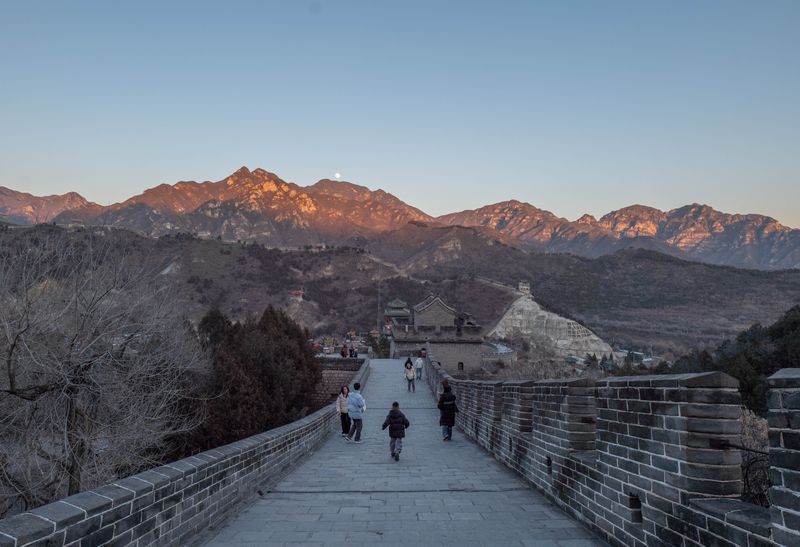
I've walked the Great Wall more than a hundred times with clients. Every single time, I tell them the same thing before we start: "Don't look at your phone. Just stand there for one minute and let it hit you." The look on their faces when they finally look up — that never gets old. Most tourists go to Badaling because that's what the tour buses advertise. I take my clients to Mutianyu. Same wall, better experience — way fewer people, a cable car up, and a toboggan ride down that adults enjoy more than kids (don't tell my children I said that). Pro tip from hundreds of trips: arrive before 8am. The ticket queue at 10am can be 40 minutes. At 8am you walk straight through. And bring water — the vendors on the wall charge triple. If you really want to escape crowds, Jinshanling is where I go when I have a free weekend. It's unrestored, crumbling, and absolutely stunning. Pack a picnic and you can walk for hours without seeing another tourist.
-611m ago10
Saw a confused tourist at the ticket machine in Chongqing North Railway Station today. He was holding a printed booking confirmation and trying to figure out what to do next. I told him: you don't need a paper ticket. Your passport IS the ticket. Just scan it at the gate and walk through. His face went from stressed to relieved in two seconds. That interaction reminded me how much has changed. 15 years ago I was the confused one — queuing for paper tickets, showing up an hour early just in case. Now? I book on 12306 while cooking breakfast, scan my passport at the station, and I'm on the train. The whole thing takes 10 seconds. I told the guy: if you're nervous about the train system, download 12306 and practice searching a route before your trip. Even if you're not booking yet, just get familiar with the interface. And remember — your passport is your ticket. No printing needed.
-53m ago10
Last night I wanted 小龙虾 (crawfish) but didn't want to leave the house. Opened Meituan at 9:14 PM. Food arrived at 9:36 PM. Still steaming. Cost: ¥68 including delivery. China's food delivery ecosystem is something I don't think visitors fully appreciate until they experience it. Meituan and Ele.me cover everything — from hotpot ingredients delivered to your door to a single bubble tea at 2 AM. For travelers, here's how to use it: Download Meituan or Ele.me before your trip. The apps are in Chinese, but the interface is visual — food photos, star ratings, price tags. Open it, look at what's nearby, and point at something that looks good. Most hotel front desks will help you place an order if you show them what you want on your phone. I've done this for friends visiting from abroad countless times — they pick a photo, I type the address, and 30 minutes later dinner arrives. Payment is through Alipay or WeChat Pay, both already linked in the app if you've set them up. Cash on delivery also works in most places. The real magic? Late at night when jet lag hits and you've been in your hotel room for hours and suddenly realize you haven't eaten. A few taps on the phone and hot noodles show up at your door. That's modern China, and it's beautiful.
4h ago10
A friend is planning her first China trip in July and asked: "Is it really that hot?" Yes. It really is. Beijing in July hits 37–40°C with a sun that feels personal. I once walked from the north gate of the Forbidden City to the subway — 15 minutes — and looked like I'd jumped into a pool. Not my proudest moment. But here's what I've learned from 15 Chinese summers: the heat is different everywhere, and you can plan around it. Beijing and Xi'an: dry heat, intense sun, tolerable in the shade. Carry a portable fan and drink hot tea — yes, hot tea — it actually cools you down better than cold drinks. My grandmother taught me that. I didn't believe her until I tried it. Chengdu and Chongqing: humid heat that wraps around you like a wet blanket. But the nightlife makes up for it — shops, food stalls, parks all alive after 9 PM. Do your sightseeing in the morning, nap through the afternoon, then go explore when the sun goes down. Yunnan, Qinghai, and the Northwest: actually pleasant in summer. 20–28°C in most places. Lijiang, Dali, and Qinghai Lake are perfect July escapes if you want a break from the heat. One thing I always tell people packing for summer China: bring a light long-sleeve. Sun protection, air-conditioned buildings, temple dress codes — you'll need it. And don't forget a portable fan. Best 20 yuan I've ever spent.
5h ago10
A solo traveler from Brazil asked me yesterday: "Is it weird to travel China alone?" I told her about the afternoon I spent by myself at a temple in the mountains outside Chengdu. No phone signal, no itinerary, just me and the sound of wind through bamboo. One of the best afternoons of my life. China is actually great for solo travel — especially if you want time to think. Morning tai chi in a park full of strangers who don't mind your presence. A quiet corner in a tea house with a book. Walking the Great Wall sections away from the cable car crowds. The secret most people don't know: Chinese culture values that kind of solitude too. The concept of "独处" (being alone) isn't loneliness — it's self-containment. A chance to reset. My advice: pick one city and stay 4-5 days instead of jumping cities every 2. Find a neighborhood coffee shop. Visit the same noodle place twice. Let the place find you instead of chasing it. That's where the real China shows up.
1d ago10
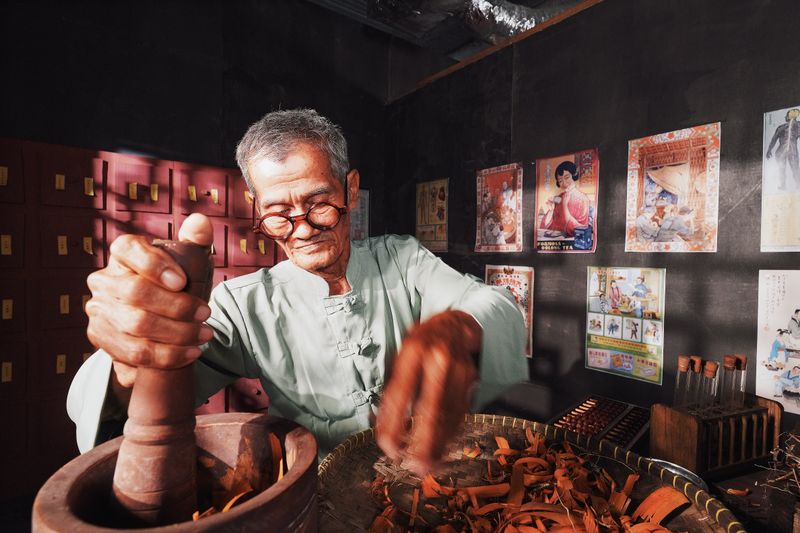
A Canadian guest asked me today why Chinese people always drink hot water. I laughed — I tell my own kids the same thing. In Chinese medicine, cold drinks shock your system. Hot water aids circulation and recovery. And when it is humid and sticky in Shanghai summers? Red bean soup is the traditional fix. You do not need to believe in TCM to feel the difference. My guests are always surprised how good they feel after a week of eating and living this way.
2d ago10
Just reminded a Swedish client to check the lunar calendar before booking March dates. Qingming Festival — the whole country goes tomb sweeping. Streets empty, everything changes. Chinese festivals shift every year with the lunar calendar, most foreigners do not realize. Spring Festival (Jan/Feb) = nationwide travel rush. Qingming (April) = spring outings and grave sweeping. Dragon Boat (June) = zongzi rice dumplings everywhere. Mid-Autumn (Sept/Oct) = mooncakes with family. Travel with Chinas rhythm, not against it.
2d ago10