14 篇文章 · 精选中国旅行贴士
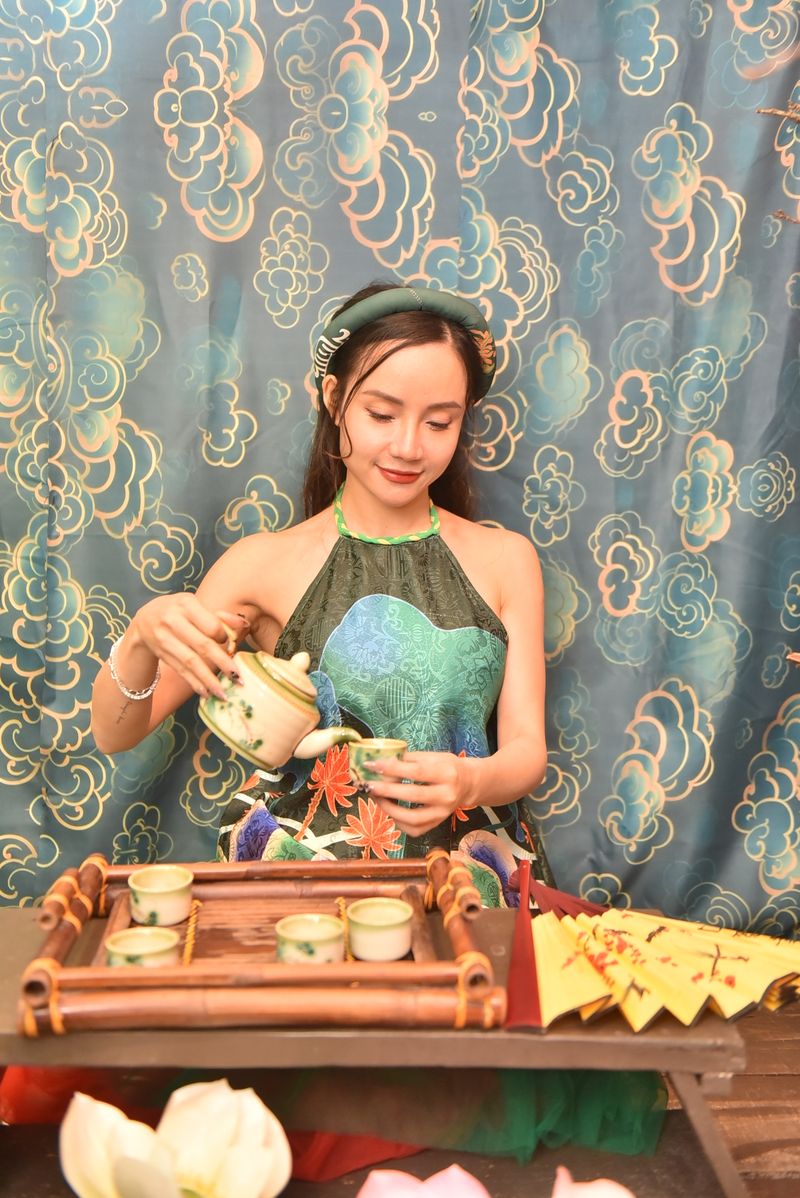
My 6-year-old watched my dad do his morning tea ceremony yesterday and asked: "Mama, why does Grandpa pour out the first round?" I explained: the first steep wakes up the leaves. It rinses off dust from months of storage. It warms the pot and the cups. And honestly — it is just what we have always done. She watched my dad with new eyes. Ten seconds later: "So Grandpa knows everything about tea?" My dad, without looking up: "No. I just know this one thing well. And that is enough." That is the most Chinese answer I have ever heard. Humble, honest, and completely unimpressed by the question.
A client from New York asked me what I do when I get stressed. I told her: I read the Tao Te Ching. She looked at me funny — she was expecting "yoga" or "a glass of wine" maybe. But I've been reading it for over a decade now. Someone gave me a copy years ago, and it stuck. There's a line I think about a lot when work gets overwhelming: "The best way to fill a cup is to empty it first." (I'm paraphrasing — the original is more elegant.) I'm not saying you need to read ancient Chinese philosophy to enjoy China. But if you visit a Taoist temple — like Qingyang Palace in Chengdu or the temples on Qingcheng Mountain — sit quietly for a few minutes before pulling out your phone. Read the inscriptions on the pillars. Watch the incense smoke rise. You don't need to understand every character to feel what the space is trying to say. Most tourists photograph the building and leave. The ones who stay a little longer are the ones who remember it differently.
My son asked me last week: "Mama, why do Chinese people eat with chopsticks?" I didn't have a good answer. So I asked my uncle, who's been a chef for 40 years. He said: "Because we cut everything in the kitchen. No knives on the table. The chopsticks are for picking up what's already ready." And that's actually a great way to understand Chinese food culture. Western cooking leaves the knife to the diner. Chinese cooking does all the work for you — meat sliced thin, vegetables bite-sized, everything ready to pick up and eat. The chopstick is just the tool that delivers it. The real skill isn't chopsticks — it's the rice bowl. Hold it close to your mouth and push food in. That's how locals eat. Keeping the bowl on the table and leaning down? That's what kids do (and my four-year-old still does it, sauce on his chin, every single meal). If you can handle chopsticks well enough to pick up a single peanut, you're better than most tourists. If you can pick up a slippery mushroom? You've graduated.
A British couple joined me for dinner at a local restaurant in Chongqing. When the food arrived — six dishes for four people — the husband looked confused. "Should I order my own plate?" I explained: in China, you do not order for yourself. Dishes go in the center of the table and everyone shares. The round table with the rotating glass top (lazy susan) is designed for this. You spin it, take what you want, spin it to the next person. There are rules nobody tells you: wait for the host to start eating first. Do not stick your chopsticks upright in your rice bowl (that is for funerals). If you are the host, order one dish per person plus one more. The fish should face the guest of honor. The British guy spent the whole dinner trying to serve others before serving himself — which is actually the correct Chinese way of showing respect. By the end of the meal he had figured out the rhythm: you eat, you talk, you spin, you repeat. He told me: "This is how dinner should be. It is social. Western dining feels so lonely in comparison." He is not wrong. The round table is not just furniture — it is a philosophy. No head of the table. No separate plates. Just everyone eating from the same dishes, connected by a spinning circle of food.
My neighbor Auntie Wang has a key to our apartment. She feeds our cat when we are away, waters the plants, and once even picked up my younger daughter from kindergarten when I was stuck in a client meeting. I did not ask her to do these things. She just does them. This is normal in China. In the residential community (小区) where I live in Chongqing, the neighbors know each other. Grandmas watch each other's grandkids. Homecooked food gets shared across floors. If someone is sick, someone else will show up with soup. My Western clients often ask: "How do you build trust with people here?" And I tell them: you do not build it through contracts or formal agreements. You build it by showing up consistently. Same vegetable stall every morning. Same tea house every week. The fruit lady remembers what your kids like. The noodle shop owner knows your usual order. Over time, you stop being a customer and become a familiar person. When I first moved to this neighborhood 12 years ago, I barely knew anyone. Now I cannot walk to the grocery store without stopping to chat three times. That is how community works in China. It is not convenient — sometimes I just want to get home. But it is real, and I would not trade it.
A French client asked me last week: "Why does everyone keep asking if I have eaten? Is it a trick question?" She had been in Beijing for three days and every local she met greeted her with "你吃了吗" (have you eaten?). The hotel front desk, the vegetable vendor, even the security guard at the Forbidden City. I explained: it is not an invitation to eat. It is the Chinese version of "how are you." We ask about food because for centuries, having enough to eat was the most important concern. The question means "I care about your wellbeing." The correct answer is just "吃了" (yes, I have eaten) or "还没吃" (not yet) — and then you move on. She found it charming. By the end of her trip she was greeting people with "你吃了吗" herself. Her Chinese was terrible but nobody cared — they just smiled because she was playing the game. Three phrases I make every client learn: 谢谢 (thank you), 多少钱 (how much), and 我吃了 (I have eaten). The third one always gets the biggest smiles.
7 AM at my local market in Chongqing. The vegetable vendors are already on their second round of customers. An old lady selling bok choy sees me coming and shouts: Hey! The mom with two girls! Your youngest liked the spinach last time! She remembered. I have no idea how she remembered. She packed me an extra bunch of scallions and said free, for the girls. This does not happen in supermarkets. This does not happen anywhere outside China. This is what I mean when I tell my clients: come for the sights, stay for the people.
Called my mom this afternoon. She asked if I fed the kids properly this weekend (I'm 40 and she still asks this). Told her about the pancakes. She laughed so hard she started coughing, then said: "That's what you get for letting them watch YouTube instead of learning from your grandmother." Then she gave me her recipe over the phone — no measurements, just "a handful of flour, not too much, you know, until it feels right." I wrote it down but it's just three lines of "until it feels right." Classic.
Saturday 7:30 AM and I'm already awake — not by choice. My six-year-old was standing by the bed, fully dressed, announcing: "Mama, the sun is up! Park time!" I love that my kids have inherited this habit of early mornings. We walked to the neighborhood park, and as usual, the tai chi group was already there — the same people, same spots, same slow, precise movements. My younger one started copying them, arms wobbling, completely serious about it. An elderly lady paused her routine to adjust her posture. She held it for exactly three seconds before running off to chase a pigeon. This is one of those small China moments I never get tired of. Three generations in a park before 8 AM. Grandparents practicing qigong. Parents jogging. Kids stumbling around learning how the world works. No phones, no screens — just people starting their day together. My kids don't know it yet, but these Saturday mornings are shaping how they see the world. And honestly? They're shaping how I see it too.
A solo traveler from Brazil asked me yesterday: "Is it weird to travel China alone?" I told her about the afternoon I spent by myself at a temple in the mountains outside Chengdu. No phone signal, no itinerary, just me and the sound of wind through bamboo. One of the best afternoons of my life. China is actually great for solo travel — especially if you want time to think. Morning tai chi in a park full of strangers who don't mind your presence. A quiet corner in a tea house with a book. Walking the Great Wall sections away from the cable car crowds. The secret most people don't know: Chinese culture values that kind of solitude too. The concept of "独处" (being alone) isn't loneliness — it's self-containment. A chance to reset. My advice: pick one city and stay 4-5 days instead of jumping cities every 2. Find a neighborhood coffee shop. Visit the same noodle place twice. Let the place find you instead of chasing it. That's where the real China shows up.
You can spot the regulars in any Chinese park before 7 AM. The lady with the fan doing tai chi under the same tree — same spot every morning for ten years. The old man writing calligraphy with a sponge on the pavement, disappearing characters before your eyes. The group doing slow-motion badminton without a net. This is 养生 (yangsheng) — nurturing life. It's not a diet or a workout routine. It's a whole philosophy woven into daily habits. My aunt in Shanghai starts every day with a thermos of goji berry tea. My neighbor in her 70s does qigong on her balcony before sunrise. When I asked her why, she said: "I'm not exercising. I'm moving energy." I tell my western clients: if you want to understand China, skip a museum and go to a park at dawn. You'll see more about how Chinese people actually think about health, aging, and happiness in one morning than in a dozen history books. And honestly? After 15 years here, I think they're onto something.
Just reminded a Swedish client to check the lunar calendar before booking March dates. Qingming Festival — the whole country goes tomb sweeping. Streets empty, everything changes. Chinese festivals shift every year with the lunar calendar, most foreigners do not realize. Spring Festival (Jan/Feb) = nationwide travel rush. Qingming (April) = spring outings and grave sweeping. Dragon Boat (June) = zongzi rice dumplings everywhere. Mid-Autumn (Sept/Oct) = mooncakes with family. Travel with Chinas rhythm, not against it.
Brought my clients to a tea house in Hangzhou this afternoon. The owner brewed seven different teas for us — Longjing, Biluochun, the works. My Australian guests kept filling their cups to the top until I stopped them. In Chinese tea culture you never fill it all the way. That is for noodles. Tea gets small refills. And you tap the table twice when someone pours — an old thank you gesture. Such small things, but they make the whole experience.
One of my guests from Germany pointed at the Laozi quote in the hotel lobby yesterday. Asked me what it means. I told her: A journey of a thousand miles begins with a single step. She smiled — said that is exactly why she booked this trip. You see Tao Te Ching everywhere in China. Not just in books. On office walls, restaurant scrolls, park stones. Its how people here actually think, even if they have not read it.