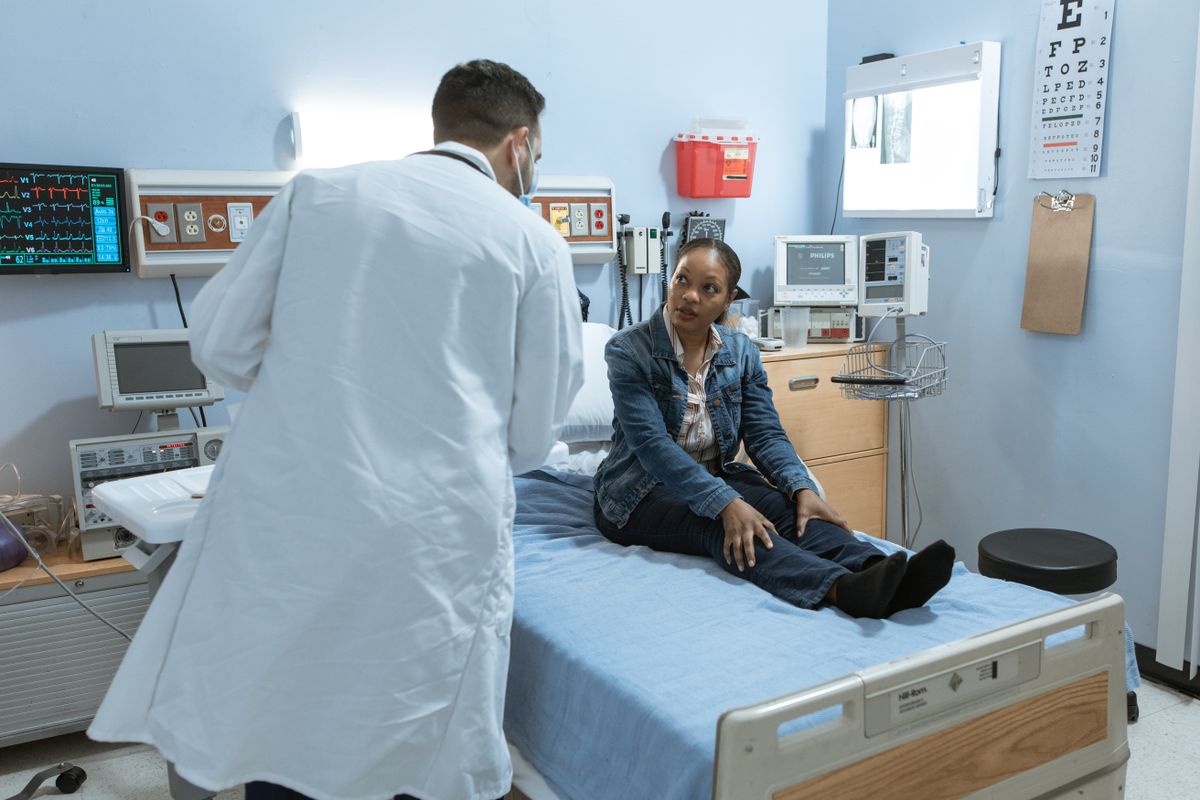
I just saw a number that made me pause: China's designated foreign-related hospitals received **1.28 million international patient visits in 2025** — a 73.6% increase from three years ago. Bloomberg ran a full feature on it, and honestly, it matches what I've been seeing on the ground for years.
I've been in the China travel and medical tourism space for over a decade, and the shift is real. A few years back, people would come to me with vague requests like, "I heard China has good hospitals — can you help?" Now? They show up with PDFs. NHS waiting lists. U.S. insurance denial letters. Australian specialist referrals. They're not gambling on a rumor — they're being pushed by their own healthcare systems to find real solutions.
### What's driving this?
- **Long waits at home** — In the UK, patients wait months for hip replacements. In Canada, MRI scans can take weeks. In the U.S., even insured patients face sky-high deductibles and denied claims.
- **Cost** — A heart bypass in the U.S. can run $150,000+. In China, at a top-tier international hospital, it might be $20,000–$30,000 (roughly ¥140,000–¥210,000). Even with flights and a hotel stay on [Booking.com](https://www.booking.com), you're still saving tens of thousands.
- **Quality** — Many of China's JCI-accredited hospitals (like those in Beijing, Shanghai, and Guangzhou) have English-speaking staff, modern equipment, and doctors trained in the U.S. or Europe.
### How people are getting there
Most international patients fly into **Beijing Capital International (PEK)**, **Shanghai Pudong (PVG)**, or **Guangzhou Baiyun (CAN)**. Direct flights from London, New York, Los Angeles, Sydney, and Dubai make it easy. I always tell first-timers to book flights on [Google Flights](https://www.google.com/flights) or [Trip.com](https://www.trip.com) — the latter often has better deals for Asia routes.
For accommodation near hospitals, [Airbnb](https://www.airbnb.com) has great serviced apartments in Shanghai's Jing'an district or Beijing's Chaoyang area, both close to major international hospitals. If you prefer a hotel, [Booking.com](https://www.booking.com) lists plenty with English-speaking staff.
### What to know before you go
- **Visa** — Apply for a medical visa (S visa) or tourist visa (L visa) at your nearest Chinese embassy. The process usually takes 4–7 business days.
- **Language** — Top hospitals have interpreters, but it helps to have a translation app like Google Translate or Pleco on your phone.
- **Payment** — Most international hospitals accept international credit cards or wire transfers. Some even work with U.S. insurance for out-of-network reimbursement.
- **Second opinions** — Many patients come just for a second opinion via video call first, then decide if they want to travel.
### Real talk
This isn't just about cheaper healthcare. It's about *access*. When your home system says "wait six months" or "we don't cover that," people are voting with their feet. And China's hospitals — especially the foreign-related ones — are ready.
If you're curious, start by checking hospital websites like **Beijing United Family Hospital** or **Shanghai East International Medical Center**. They have English pages and email contacts. You can also search on [Trip.com](https://www.trip.com) for medical tourism packages that bundle flights, hotels, and hospital appointments.
> **Bottom line:** The 1.28 million number isn't just a statistic — it's a sign that global healthcare is changing. And for many, the best option is now a flight away.